
Adherence to Blood Glucose Self‑Monitoring in Iran: The Role of Social and Behavioral Factors in the Control of Type 2 Diabetes
Adherence to Blood Glucose Self‑Monitoring in Iran: The Role of Social and Behavioral Factors in the Control of Type 2 Diabetes
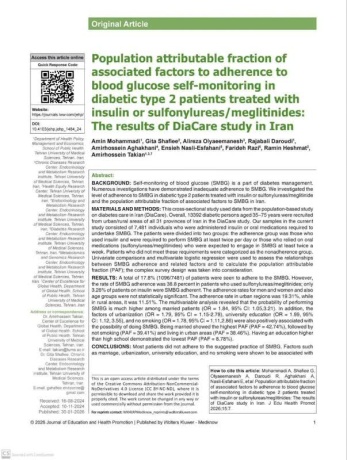
An article led by Dr. Amirhossein Takian, Head and Founder of the Center of Excellence for Global Health at Tehran University of Medical Sciences, in collaboration with researchers in the field and with the strategic participation of Dr. Ramin Heshmat and Dr. Gita Shafiee from the Endocrinology and Metabolism Research Institute, has been published in the international journal Journal of Education and Health Promotion.
This nationwide study examined adherence to blood glucose self‑monitoring among patients with type 2 diabetes and provides a clear picture of the current status of self‑care practices in this population.
The findings show that only 17.8% of patients with diabetes in Iran adhere to regular blood glucose self‑monitoring. Factors such as being married, non‑smoking status, urban residence, and having a university education were significantly associated with higher adherence levels.
Policy Recommendation Based on the study results, diabetes control policies should be redesigned with a stronger focus on targeted patient education, strengthening family and social support, and ensuring equitable access to blood glucose self‑monitoring tools, particularly for individuals who live alone, reside in rural areas, smoke, or have lower levels of education.
Access to the article:
 Soroush
Your Comment :