
TUMS Launches International Autumn School on Global Health Diplomacy to Strengthen Health Leadership
Tehran University of Medical Sciences (TUMS) has launched an International Autumn School on Global Health Diplomacy, bringing together international representatives, senior health and foreign affairs officials, and university leaders to strengthen diplomatic skills and advance international cooperation in health.
Hosted by the TUMS Center of Excellence for Global Health, the three-day program opened on October 21, 2026, at the Global Health Observatory building. It aims to address emerging global health challenges, enhance negotiation skills, and foster sustainable networks for scientific and international collaboration.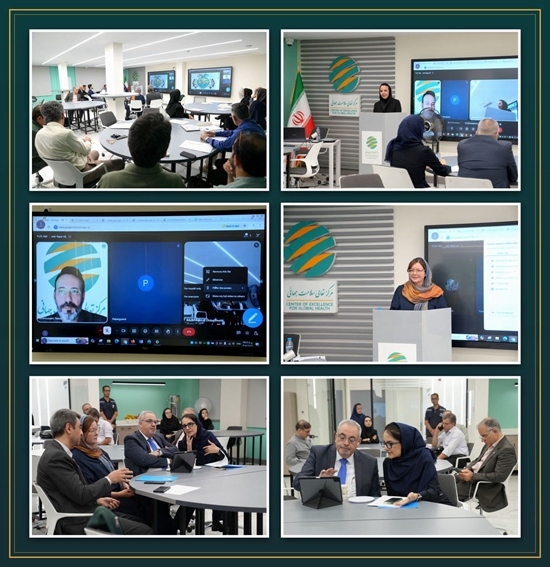
Strengthening Global Health Diplomacy Through Academic and Institutional Cooperation
Opening the program, Dr. Amirhossein Takian, Head of the TUMS Center of Excellence for Global Health, emphasized that international relations are undergoing fundamental changes, with health increasingly extending beyond national borders and intersecting with political, economic, and diplomatic affairs.
He noted that effective global health diplomacy requires more than a willingness to cooperate. It depends on credible scientific evidence, professionals with expertise in both health and international relations, and sustained institutional engagement. He added that the school was designed not only as a training program but also as a means of building a community of practice and a network to support continued collaboration.
Dr. Marjan Yaghmaie, Director of International Relations at TUMS, welcomed participants and described the school as an opportunity to reconsider the university’s role in global health, beyond the scope of a conventional educational course.
She highlighted how national decisions on infectious disease control, vaccine access, and humanitarian crisis management can have consequences far beyond a country's borders. Global health diplomacy, she said, has therefore become a strategic necessity for more effective governance and stronger national health system resilience, requiring close collaboration among academic institutions, executive bodies, and policymakers.
Referring to the university’s four-year strategic plan for international relations management, Dr. Yaghmaie identified global health diplomacy as a key priority. She outlined three principal expectations for participants: mutual learning, the development of sustainable cooperation networks, and the formulation of realistic policy proposals.
WHO Highlights the Role of Diplomacy in Advancing Global Health
Dr. John Jabbour, World Health Organization (WHO) Representative in Iran, commended TUMS and its Center of Excellence for Global Health for organizing the initiative.
He observed that health is increasingly interconnected with security, trade, economic development, migration, technology, and international relations. Global health diplomacy, he explained, is a key tool for articulating health priorities, building mutual understanding, and translating scientific evidence into policies and practical action.
Dr. Jabbour emphasized that this process extends beyond international negotiations. It begins at the national level through cooperation across government sectors and engagement with universities and civil society. He also highlighted Iran’s valuable experience in primary health care, public health, and emergency response.
Advancing Diplomatic Skills and Regional Health Cooperation
Dr. Mohammad Reza Dehshiri, Dean of the School of International Relations at Iran’s Ministry of Foreign Affairs, stressed the importance of strengthening managers’ diplomatic competencies and expanding links between universities and international institutions.
He identified diplomatic literacy and practical training in negotiation, simulation exercises, and international protocol as essential components of this effort. The Ministry of Foreign Affairs, he noted, can serve as a bridge between Iranian and international universities, helping Iranian experts participate in global forums.
Dr. Dehshiri also highlighted neighborhood diplomacy as a priority, emphasizing opportunities to facilitate health tourism and help meet neighboring countries’ pharmaceutical and medical needs.
Addressing the practical outcomes of global health diplomacy, Dr. Mohammad Amirkhani, Deputy Director General for International Affairs at Iran’s Ministry of Health and Medical Education, identified three key objectives: strengthening the health system, expanding Iran’s effective regional role, and securing an appropriate share of the health market.
He cautioned that the health market is multidimensional and should not be viewed solely in financial terms. Highlighting opportunities for international cooperation in medical education, he said Iran was prepared to contribute to workforce training and the accreditation of medical education systems in neighboring countries.
Dr. Amirkhani also encouraged academics and health managers to make greater use of multilateral platforms—including the Economic Cooperation Organization (ECO), the Shanghai Cooperation Organisation (SCO), BRICS, and the Organization of Islamic Cooperation (OIC)—to develop joint projects and benefit from available cooperation mechanisms.
Sharing Iran’s Public Health Experience with the Region
Dr. Javad Rafiee-Nasab, Dean of the TUMS School of Public Health, highlighted the school’s national and international role and announced efforts to offer regional and international Master of Public Health (MPH) programs for neighboring countries.
He also expressed the school’s readiness to share Iran’s experience in developing its primary health care network with countries across the region. Emphasizing prevention and public health, Dr. Rafiee-Nasab noted that expanding treatment infrastructure alone is not an adequate measure of a health system’s success.
He stressed that improving health literacy, strengthening preventive services, and reinforcing primary health care should remain central to efforts to improve population health.
UN Calls for Equity and Multilateral Cooperation in Global Health
Christine Weigand, United Nations Resident Coordinator in Iran, highlighted the lessons of the COVID-19 pandemic, particularly the inequalities in access to vaccines, diagnostic tools, and essential medicines.
She explained that disruptions to global supply chains and economic disparities deepened these inequalities during the pandemic. Referring to the UN Secretary-General’s call to action, she emphasized that the international community has a shared responsibility to turn the lessons of the pandemic into lasting preparedness grounded in equity, solidarity, and effective multilateral cooperation.
Ms. Weigand also cited the eradication of smallpox during the Cold War as an example of how health diplomacy can create common ground even amid complex political circumstances.
She stressed that the true measure of success in global health diplomacy is not the number of meetings held or agreements signed, but tangible improvements in people’s lives, reduced health inequalities, and stronger preparedness for future challenges.
From Dialogue to Action
At the conclusion of the opening session, participants emphasized the need to develop joint action plans, establish specialized committees, and design practical mechanisms to advance global health diplomacy.
Over the three-day program, participants are scheduled to engage in case studies, practical exercises, and simulations of international negotiations, with the aim of translating learning into actionable policy proposals. They also took part in specialized working groups and presented reports on their activities.
Through this initiative, TUMS aims to strengthen the skills, partnerships, and institutional networks needed to advance global health diplomacy and support more effective international cooperation in health.
Your Comment :