
TUMS Researchers Develop Rapid Haemostatic Nanotechnology for Emergency Bleeding Control
A new generation of biocompatible haemostatic powder, pad and bandage developed at Tehran University of Medical Sciences can control severe bleeding in less than 20 seconds while reducing infection risk and promoting wound healing.
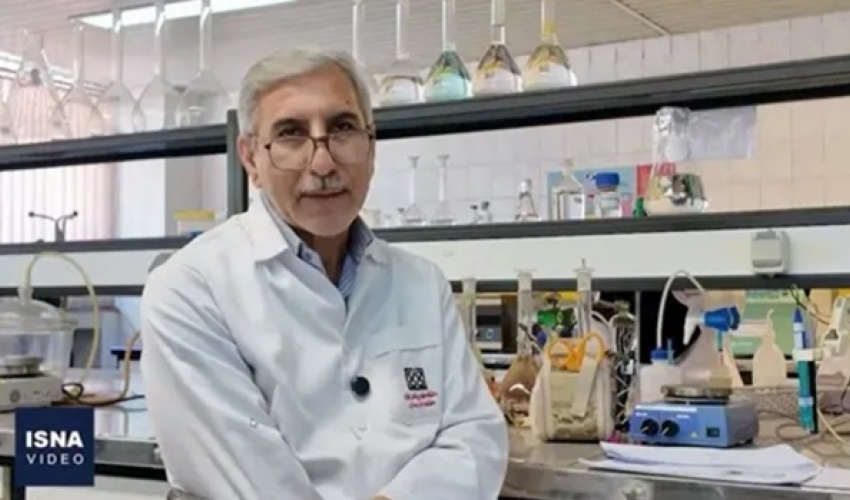
Researchers at Tehran University of Medical Sciences (TUMS) have developed an innovative haemostatic technology designed to rapidly control severe bleeding in emergency and clinical settings. The new product family—including a haemostatic nanopowder, pad and bandage based on biocompatible polymers—offers a locally developed solution for trauma care with potential applications in hospitals, emergency medical services, disaster response and military medicine.
The research was led by Professor Ismaeil Haririan, Professor of Pharmaceutics at the TUMS Faculty of Pharmacy and Director of the Biomaterials Research Center. According to Professor Haririan, the newly developed products are capable of controlling severe bleeding in less than 20 seconds while providing antibacterial and anti-inflammatory properties that help reduce infection and accelerate wound healing.
Uncontrolled haemorrhage remains one of the leading causes of preventable death following traumatic injuries in both civilian and military environments. The project was initiated to address this critical healthcare challenge by developing an effective haemostatic technology that combines rapid bleeding control with enhanced biological performance.
Following an extensive review of scientific evidence and clinical needs, the research team formulated a proprietary combination of coagulation-promoting materials using biocompatible polymers. The technology was subsequently translated into three complementary products—a haemostatic nanopowder, pad and bandage—manufactured through controlled production processes suitable for medical use.
The products successfully completed a comprehensive series of laboratory evaluations, including physicochemical, microbiological, biocompatibility, cytotoxicity, sensitisation and irritation tests before undergoing sterilisation for clinical application.
Evaluation results demonstrated that the technology can achieve haemostasis in under 20 seconds without causing skin toxicity or allergic reactions. In addition to rapid bleeding control, the products exhibit antibacterial activity that reduces the risk of infection while supporting tissue repair. Their simple method of application also enables use by healthcare professionals, emergency responders and trained first-aid providers in both routine and crisis situations.
Professor Haririan emphasised the broader significance of the innovation:
"This project demonstrates how university research can be translated into practical medical technologies. Beyond improving emergency bleeding control, these products have the potential to strengthen trauma care, reduce dependence on imported haemostatic materials and support the development of advanced medical technologies."
The haemostatic products are expected to be used across a wide range of healthcare and emergency settings, including hospitals, ambulances, emergency response units, military operations, industrial workplaces and first-aid kits, where rapid haemorrhage control is critical for improving patient outcomes.
The project represents a successful example of technology translation at TUMS, transforming academic research into an innovative healthcare solution with potential clinical, economic and strategic impact. By strengthening national capabilities in advanced medical technologies, the innovation also creates opportunities for future clinical adoption, commercialisation and international collaboration in trauma and emergency medicine.

Your Comment :